Your electrician just charged you $285 to replace two bulbs in the lobby. The actual work took eleven minutes. The minimum service call charge, the trip charge, the fuel surcharge, and the hourly rate for a licensed electrician did not scale down because the job was small. That is not a billing error. That is the standard rate structure for commercial electrical contractors in Fairfield County, and it makes lamp replacement one of the most expensive line items on a facilities maintenance budget relative to what is actually being done.
Facilities managers, property managers, and office administrators across Greenwich, Stamford, Westport, and Norwalk have found a predictable fix for this specific problem: use our Bulb and Battery service for lamp replacement and detector maintenance, and reserve the licensed electrician for work that actually requires electrical licensure. Lamp replacement in an existing fixture does not. Smoke detector battery swaps do not. CO detector replacement does not. These are all maintenance tasks that a qualified handyman service can legally and competently perform in Connecticut.
The Real Cost of Using Electricians for Bulb Replacements
Electricians in Fairfield County typically charge between $125 and $200 per hour with a one-hour minimum on commercial service calls. Many add a trip charge of $75 to $150 on top of the hourly rate. For a job that involves climbing a ladder, unscrewing a bulb, and replacing it with an identical unit, the cost structure is completely misaligned with the complexity of the task.
Licensed Electrician
Alliance Handyman Pros
The math changes even more substantially when you batch work. An electrician who charges a one-hour minimum will bill the same amount for one bulb as for five bulbs at the same location. Our rate structure rewards batching. Facilities managers who collect a list of burnt-out bulbs, expired detector batteries, and minor maintenance items and schedule a single visit pay a fraction of what multiple electrician dispatches would cost for the same outcome.
Who Uses This Service
The commercial calls we handle most frequently come from a predictable set of property types, each with a distinct maintenance problem.
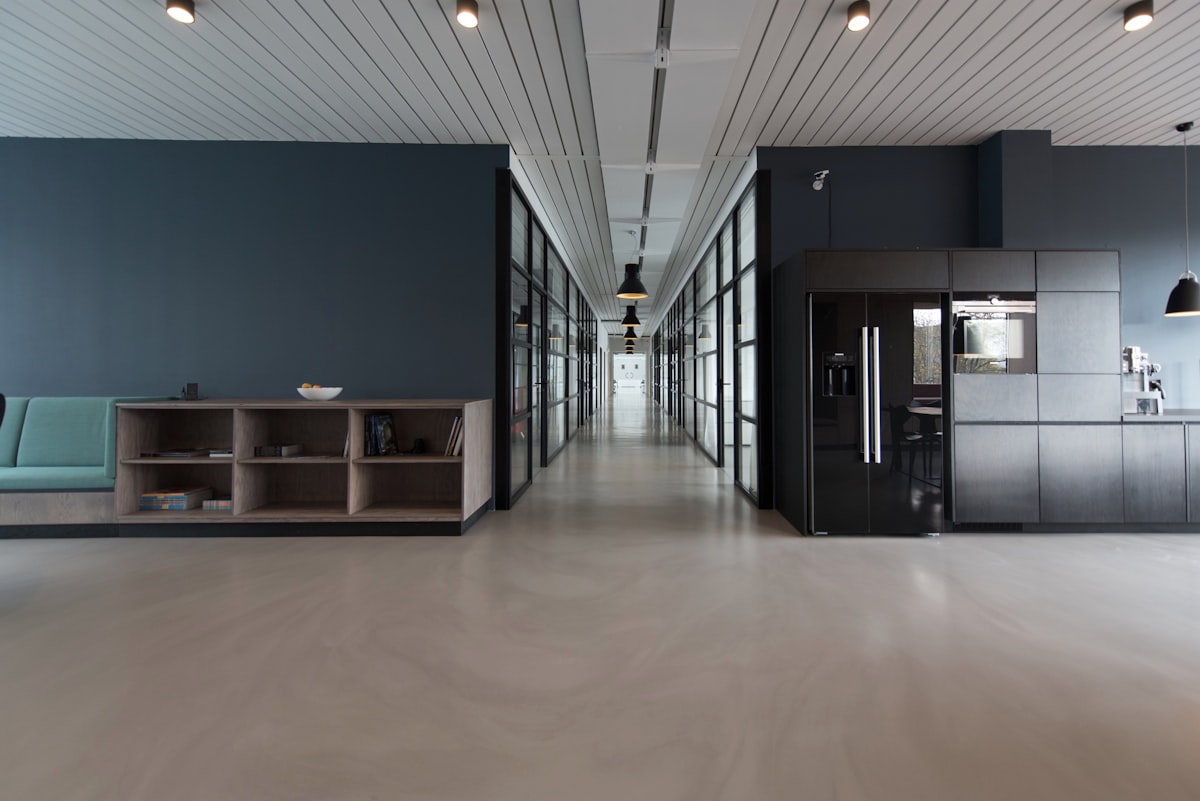
Office buildings and professional suites in Greenwich, Stamford, and Westport commonly have recessed lighting throughout conference rooms, lobbies, and open office areas. These fixtures are often 9 to 14 feet high and require a full extension ladder to service. The office manager is not going to climb a ladder. The maintenance guy has a full queue. The electrician charges minimum billing for each visit. Quarterly or as-needed visits from us handle the backlog at a fraction of the cost and on a schedule that does not interrupt tenants during business hours.
Restaurants are some of the most lamp-intensive commercial spaces we service. Pendant lighting over tables, recessed spots in the bar area, track lighting in the kitchen pass, and exterior sign lighting all cycle at different rates and require access to different ceiling heights. A restaurant with a dark pendant over a table on a Friday evening has a customer experience problem. Having us on call for same-day service is a much more manageable situation than waiting three days for an electrician.
Property management companies handling multiple residential and commercial buildings across Fairfield County are our highest-volume commercial relationships. The model is simple: rather than dispatching an electrician to each building every time a bulb fails, the property manager batches work by building and calls us for a scheduled maintenance visit. We handle bulb replacements, detector battery replacements, and minor repair tasks across the building in a single visit, with a single invoice and a service record that goes into the building file.
Smoke and CO Detector Compliance for Commercial Properties
Commercial smoke and CO detector compliance is not optional, and the enforcement mechanism is not abstract. Fire marshal inspections in Connecticut municipalities can result in citation, required remediation timelines, and in cases of significant non-compliance, orders affecting occupancy. Insurance carriers covering commercial properties may void coverage for fire-related losses if the property was found to be non-compliant with detector requirements at the time of a claim. That is not a theoretical risk. It is a documented position taken by commercial property insurers in Connecticut.
NFPA 72 governs detector placement in commercial spaces, and the specific requirements vary by occupancy type, square footage, and ceiling height. Common gaps we find on commercial compliance visits include detectors past their manufacturer service life (most are rated for 8 to 10 years), missing CO detectors in spaces with gas-fired equipment, and dead backup batteries in hardwired systems that pass a visual inspection but fail a functional test.
Annual testing is a code requirement for commercial fire detection systems. The testing requirement does not mean an engineer with test equipment needs to visit every detector. It means someone needs to confirm that each detector activates when tested, that batteries in battery-backup units are functional, and that replaced units are documented. We handle this for commercial clients as part of our scheduled maintenance visits, with a written record of what was tested, what was replaced, and the date of service.
Managing a commercial property in Fairfield County? Let's discuss a service plan.
The Case for Scheduled Maintenance vs. Reactive Calls
Reactive maintenance is the most expensive way to run a commercial property. A burnt-out bulb in a dark parking lot at 9pm on a Thursday is a different problem than a bulb replacement that was scheduled as part of a quarterly walkthrough. The reactive call requires same-day dispatch, which costs more regardless of who you call. The parking lot is dark and presents a liability concern in the meantime. And if the issue is three burnt-out bulbs rather than one, the cost of that reactive call is even more misaligned with what was actually needed.
Scheduled maintenance visits work differently. We agree on a frequency, monthly, quarterly, or semi-annually depending on the property size and fixture count. We show up on that schedule, walk the property with the facilities contact, handle everything on the list, and document what was done. Nothing is urgent because nothing was allowed to become urgent. The cost per unit of work is lower because we are not responding to an emergency. The record-keeping is consistent because every visit produces the same documentation format.
For property management companies handling five or more buildings, consolidated invoicing across the portfolio is available. One invoice, one vendor contact, one service record format for every building. That administrative simplicity has value that is separate from the per-visit cost savings. If you want the full picture of how a scheduled account works across condo and HOA associations, offices, and retail, see our commercial and property management services page.
LED Upgrades: The Commercial ROI Argument
If your commercial property still has incandescent or halogen bulbs in any high-traffic or high-access fixtures, the economics of a full LED conversion on the next replacement cycle are straightforward. Commercial-grade LED replacements for common recessed and track fixtures carry rated lifespans of 25,000 to 50,000 hours. At eight hours per business day, five days per week, that is 12 to 24 years of operation before the next access event is required for that fixture.
The access event is where the commercial savings live. For a pendant fixture over a restaurant table that requires moving furniture, a ladder, and 20 minutes of staff time to service, reducing that event from once every two years to once every twelve years has real labor and disruption value. For a lobby ceiling fixture at 14 feet that requires a specialty ladder, the value of not needing that ladder deployed is similarly concrete.
We carry commercial-grade LED replacements on the truck for the most common recessed and track fixture types in Fairfield County commercial properties. On any bulb replacement visit, we can swap in LED equivalents rather than direct replacements if the fixture is compatible. Compatibility depends on the fixture type and the dimmer switch situation in the space, and we assess that on-site before making the swap.
What a Commercial Visit Looks Like
The process is straightforward. You call (475) 500-7126 or book through our Bulb and Battery service page. We confirm the scope: how many locations, approximate fixture count, ceiling heights, any detector work included, and any access requirements like keycard or after-hours entry. We arrive at the confirmed time with the right ladders, a supply of common LED replacements and detector batteries, and a documentation form that captures everything replaced during the visit.
For first-time commercial visits, we walk the property at the start to confirm the full scope before beginning work. For ongoing accounts, we have the building profile on file. We notify you when we arrive, complete the work without requiring supervision, and provide a service summary before we leave. The invoice reflects exactly what was done, by location, with the materials used and the date of each replacement.
For property managers running multiple buildings, that service summary becomes part of the building file and satisfies the documentation requirement for annual detector testing records. It also provides a replacement history that helps predict when the next maintenance visit should be scheduled, rather than reacting when the next bulb burns out.